
Hey there, fellow South Africans. Having travelled across South Africa from the Cape Winelands through to the Kruger Bushveld, I have a wealth of experience of how travel can affect us. Recently, I have been thinking about how our travels affect the places we visit, and how we can improve them through travel. Regenerative travel is not just about the experiences we obtain; it is also about the impact of those travels on the destinations we travel to. When we travel and experience a destination, we should ensure that we leave the destination in a better state than we found it.
If you’ve been hearing about “sustainable travel” for years, regenerative travel takes the idea further. Let’s break it down properly.
The Shift from Sustainable to Regenerative
Many individuals associate sustainable travel with minimising negative impact. We reduce plastic use, choose eco-lodges, and offset carbon emissions. The goal is to support what we have so future generations can still enjoy it.
Regenerative travel goes beyond that. It’s about actively doing good. Think restoring ecosystems, putting more money into local pockets, and helping cultural traditions thrive again. Instead of just minimising damage, it aims to heal and enhance the places we visit.
The World Travel & Tourism Council describes regenerative travel as feeding positive value back into the systems we benefit from, like caring for the land and people the way we’d care for our own home.
Sustainability and regenerative travel are often used interchangeably, but they refer to slightly different concepts. Sustainability can be described as ‘leaving no trace’ or ‘being as little harmful to the environment as possible’ based on your activity (s).
Regenerative Travel
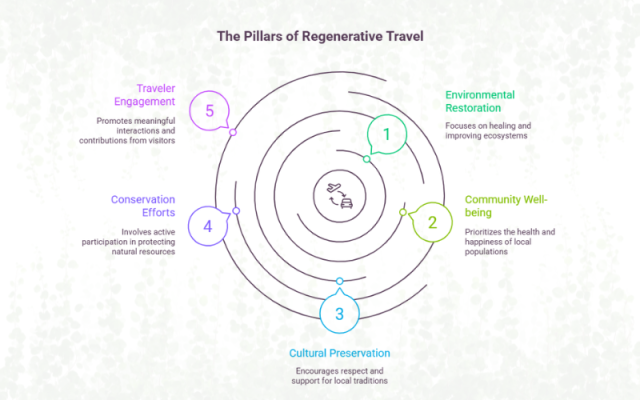
Consists of several elements that are built on the following ideas:
- The way we travel affects everyone, and we are all interconnected.
- Community members are the key decision makers when it comes to how to build a sustainable economy and what is valued.
- To protect the natural environment, many projects exist that restore landscapes through reforestation and support for anti-poaching efforts.
- The community should be able to create their own products that are their culture; they should not just wait for visitors to show up and spend money on things that are foreign to them.
- Measuring success by healthier ecosystems and happier communities, not just visitor numbers.
An example of this concept in action would be the Grootbos Private Nature Reserve in the Western Cape. This nature reserve uses the money it receives from tourism to support several conservation and community development projects that directly help the local community while restoring the environment.
Examples from the Real World (Africa)
In Africa, community-based projects are showing how regenerative travel will run in practice. Conservancies in Namibia are examples of how local communities can run their own conservancies and benefit from the tourism revenue produced. Moreover, the Maasai Mara Conservancies in Kenya offer visitors the opportunity to experience a traditional safari while simultaneously respecting and positively affecting the local Maasai culture and economy.
Closer to home, private reserves like Tswalu Kalahari are actively restoring degraded land through careful tourism practices. And in Zanzibar, Chumbe Island Coral Park uses visitor fees to protect marine life and run environmental education programmes.
These examples prove that luxury experiences and genuine positive change can exist side by side.
How Regenerative Travel Works in Practice
In everyday terms, regenerative travel means choosing trips that give back in real ways.
You might join a guided walk with local artisans, learning traditional skills while putting money directly into their pockets. Or stay at a lodge that funds anti-poaching teams or school programmes.
It’s immersive: firsthand activities like tree planting, cultural exchanges, or helping with habitat restoration. You go home enriched, and the destination improves, whether that’s more jobs, protected wildlife, or revived traditions.
The EarthCheck organisation, a global authority on sustainable tourism, describes it as true guardianship, with all stakeholders working together to enhance natural and human systems.
What is here for us, South Africans?
As South Africa is a place of incredible biodiversity and rich culture, the opportunity for regenerative travel to make a meaningful impact on issues such as employment in rural areas and Habitat Destruction is significant. When tourism handles keeping money in the community where it is generated, it creates an opportunity for long-term sustainability and resilience within those communities. As travellers, we also have a deeper appreciation of our travels through richer stories, stronger connections and memories that are much more than a quick selfie.
Bhoma Tours: Bringing Regenerative Ideas to Life
One South African company doing this well is Bhoma Tours. Their Bespoke Experiences stand out because they connect travellers with local artisans and community-led conservation projects in meaningful ways.
Imagine a custom Cape Town itinerary that includes visits to emerging artists in the townships, or a Winelands day that supports small, family-run producers. Or a Big 5 safari where conservation is the main story, not just an add-on.
Bhoma’s approach shows that luxury and positive impact can go hand in hand. You can explore their full range of offerings here: https://bhomatours.co.za/
Getting Started with Regenerative Travel
Ready to try it? Start small:
- Research operators who prioritise local partnerships.
- Ask how the experience directly helps the community.
- Choose activities that involve artisans, conservation work, or cultural exchange.
Final Thoughts
Regenerative travel isn’t a passing trend. It’s the direction our industry is heading. In a country as beautiful as ours, it’s the best way to make sure our braais by the bushveld and sundowners in the vineyards stay possible for our children and grandchildren.
Next time you plan a getaway, ask yourself: how can this trip make things better?
At Bhoma Tours, we’re enthusiastic about crafting bespoke experiences that do exactly that, connecting you deeply with South Africa’s people, places, and wildlife while supporting lasting positive change. Keen to plan your own regenerative adventure? Head over to our quote request page at https://bhomatours.co.za/ and let’s chat.
Safe travels,
The Bhoma Tours Team
